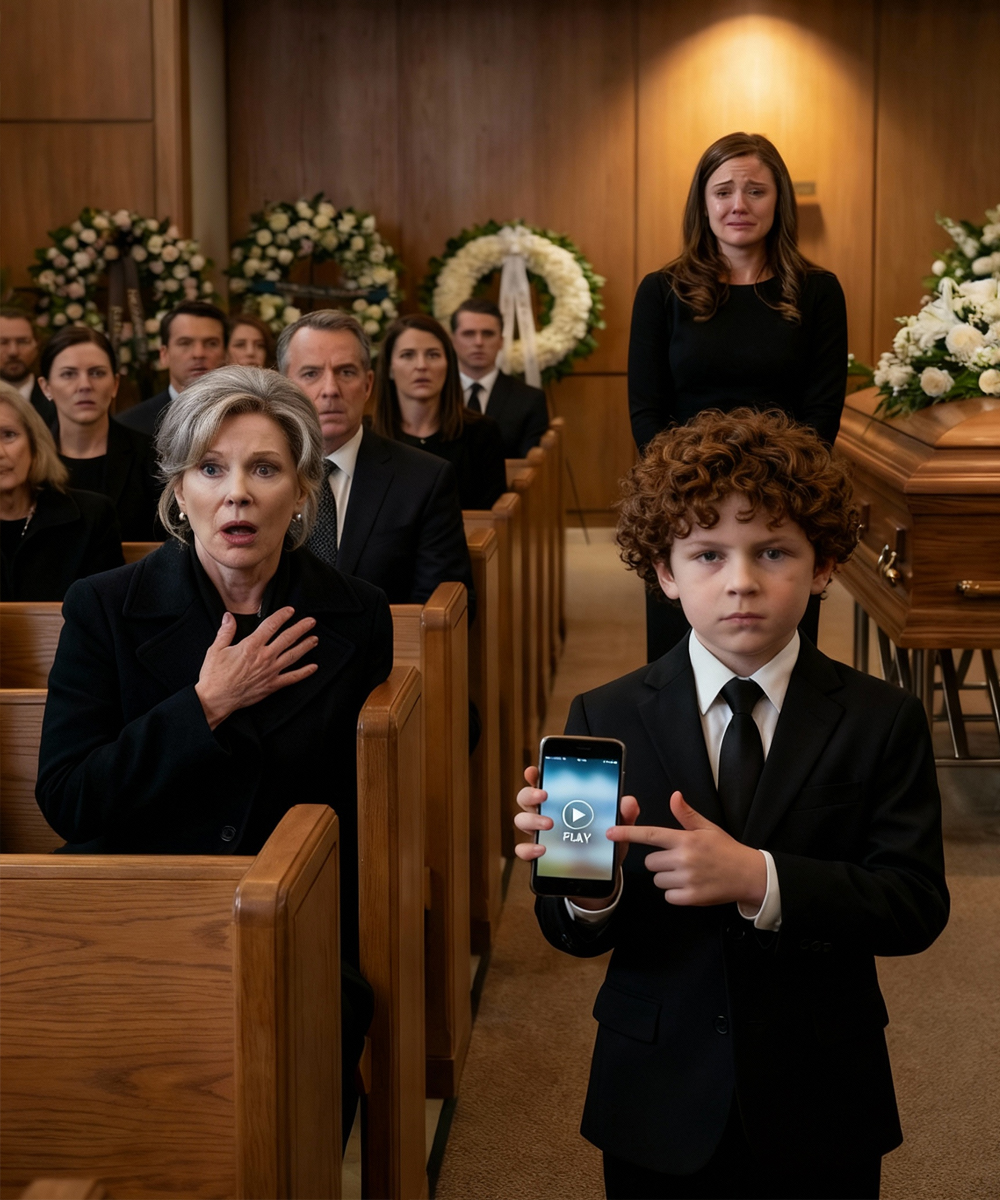
Evan asked honest questions. We gave honest answers. “Dad loved Grandma,” I told him. “He just loved us enough to stop the damage.” Evan nodded.
Mark’s recording changed more than one thing. The rumors about me stopped. At work, a colleague squeezed my shoulder. “He stood up for you,” she said. “That matters.”
One Saturday, I opened the spare folder Mark had mentioned. Inside were neatly labeled documents and a handwritten note: For Evan’s future. For your peace. There was a college fund he’d quietly added to, a list of people who remembered our family, and a final note to me: I’m sorry I waited. I’m proud of you.
We set boundaries. Diane could see Evan only with me present. She declined. That was her decision. Ours was to move forward.
Grief didn’t disappear. It learned how to behave. Some days it was quiet; other days it was loud. But the truth gave us ground that didn’t crumble beneath us.
At school, Evan wrote about bravery—not funerals or recordings, but about telling the truth when it’s difficult. His teacher emailed me: “You’re raising a good man.”
If you’ve ever been silenced to preserve appearances, remember this: telling the truth isn’t betrayal. It’s care with limits. And children understand far more than we give them credit for.
Mark’s voice no longer lives on a phone. It lives in our daily choices. If this story spoke to you, share your thoughts. Have you ever had to choose between comfort and honesty? Your story might help someone else take their first step toward the truth.